

How to Take Great Real Estate Photos That Help Homes Sell
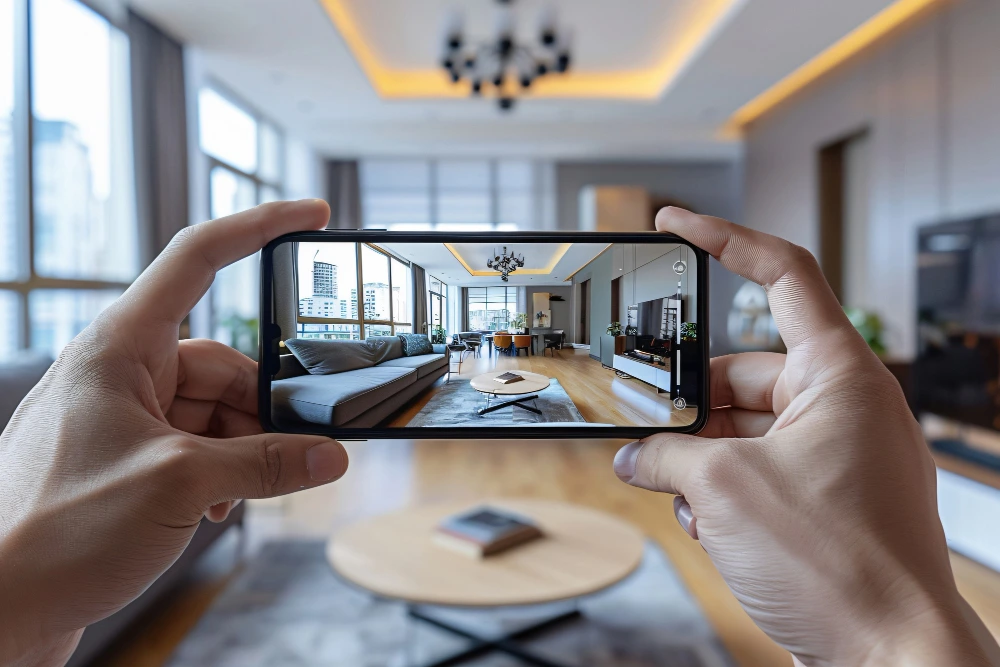
Written by: Pacific Playa Realty Team | Oct 19, 2026
Blog Summary
- Prepare and declutter the home before taking photos so each space looks clean, open, and inviting.
- Use natural light, balanced composition, and accurate angles to show rooms clearly without making them look larger than they are.
- Focus on the features that make the property stand out, from updated kitchens and spacious living areas to outdoor spaces and views.
- Use photos alongside floor plans, videos, and virtual tours to give buyers a clearer picture of the property before a showing.
- Great photography gets attention, but strong marketing and the right real estate team help turn that attention into serious buyers.
Table of Contents
ToggleYour property photos are often the first showing.
In 2024, 43% of homebuyers said their first step in the home-buying process was searching for properties online, and 41% considered photos a very useful feature on real estate websites (NAR).
You don’t need every expensive camera or the latest editing software. You just need a good eye, a prepared property, and a clear understanding of what buyers need to see.
Start Before You Pick Up the Camera
Walk through the property as if you were seeing it for the first time. Notice what catches your eye as you enter each room. Then look again from the doorway, the corner, and where a buyer would naturally stand.
Move anything that distracts from the space.
That can mean clearing kitchen counters, removing extra furniture, hiding trash cans, putting away personal items, straightening bedding, opening curtains, and cleaning reflective surfaces. The goal isn’t to make the home sterile. A home should still feel lived-in and welcoming. It simply needs to be easy for a buyer to picture as their own.
This is one of the most useful tips for real estate photography because a camera records everything. Clutter that seems minor in person can become the first thing someone notices in a photograph.
Pay attention to small details, too. A crooked lampshade, wrinkled bedspread, toilet lid left open, or collection of bottles beside a sink can pull attention away from the property.
Preparation is free. Take advantage of it.
Photograph the Home as the Buyer Experiences It
A listing should tell a story. Start with the strongest exterior or primary image. This is the photograph that needs to make someone stop scrolling. It should give a clear sense of the property, not simply show a close-up of the front door.
From there, move through the home logically.
Show the entry. Then the main living areas. Move into the kitchen, bedrooms, bathrooms, outdoor spaces, and features that make the property different from others in the same price range.
Avoid making buyers piece together the layout from random photographs.
Good real estate photography tips often have less to do with expensive equipment and more to do with sequencing. If a buyer sees a beautiful kitchen, then an unrelated bedroom, then a backyard with no context, the listing can feel disjointed.
The photographs should make the property easier to understand. Buyers increasingly use digital tools to narrow down the homes they want to see. Over 79% of prospective buyers were more likely to view a home when the listing included a floor plan they liked, while 27% ranked high-resolution photos as the most important listing feature (Zillow, 2023).
Photos and floor plans work together. One shows what the space looks like. The other helps explain where everything fits.
Use Natural Light
Light can change a room’s entire feel.
Open the curtains and blinds. Turn on lamps and overhead fixtures when they add warmth. If possible, photograph rooms when the natural light is strongest without creating harsh glare.
Watch the windows. A common mistake is exposing for a bright window while letting the rest of the room fall dark. The opposite problem can happen, too. A room can become washed out when the photographer pushes exposure too far.
One of the simplest tips for real estate photography is to look at the entire frame before taking the shot. Ask whether the room, windows, flooring, walls, and major features are all visible.
For exterior photographs, timing matters even more. Harsh midday sunlight can create deep shadows and make colors look flat. Early morning or late afternoon light can provide a softer appearance.
No magic hour works for every property. Consider the house’s direction, the weather, the surrounding buildings, and the feature you’re photographing.
Get the Camera Height Right
You don’t need to photograph every room from waist level or from the ceiling.
Wide-angle lenses can show more of a room, but wider isn’t automatically better. Push the lens too far, and a normal-sized room can suddenly look enormous. Furniture may look distorted, corners can stretch, and the photograph may promise a space that doesn’t match reality. That is a problem.
Real estate photography shouldn’t make a property look artificially large. Buyers should walk through the home and recognize what they saw online.
Position the camera at a comfortable height that gives buyers a natural view of the space. Keep vertical lines as straight as possible. Door frames, cabinets, walls, and windows shouldn’t look like they are leaning inward.
Make social media less time-consuming with easy scheduling and publishing tools.
Affiliate Disclosure: This article contains affiliate links. Clicking on these links and buying these products may result in us receiving a commission at no additional cost to you.
Show the Features Buyers Need to See
If the kitchen has a large island, show it. If the living room opens directly onto a patio, capture that connection. If a primary bedroom has an unusual ceiling detail, fireplace, balcony, or view, give it enough attention to make the feature understandable.
The same principle applies outside.
Show the yard, entertaining area, pool, garage, driveway, views, landscaping, and other features that influence the property’s appeal.
But don’t turn the listing into a catalog of nearly identical images. Ten photographs of the same living room from slightly different angles don’t provide ten times the information.
Good tips for real estate photography include being selective. Every photograph should earn its place.
Don’t Hide the Awkward Parts
If a room is small, photograph it honestly. If a neighboring building is visible, don’t crop it out in a way that creates a misleading impression. If the best feature of the backyard is actually the view from one particular angle, show the context around that view when necessary.
This matters because buyers aren’t only judging the house, but also whether the listing feels trustworthy. Buyers feel misled when online listing images create expectations that don’t match the property in person (Tracy, 2026). That distinction should guide every set of real estate photography tips a seller or agent follows.
READ RELATED ARTICLE

Edit with a Light Touch
Editing is part of modern real estate photography. It can correct exposure, balance color, reduce distractions, and make the final set look consistent. But editing should improve the photograph, not rewrite the property.
Keep walls looking like walls. Keep grass looking like grass. Keep skies believable. Avoid excessive saturation and unrealistic lighting.
The same goes for digitally removing permanent features. If an object or condition materially affects the property, hiding it can create the wrong expectation. Be consistent.
When buyers scroll through a listing, the photographs should feel like they belong to the same home. One room shouldn’t be warm and orange while another looks blue and clinical. A clean, consistent set of images feels more professional.
Great Photos Are Part of a Bigger Selling Strategy
Great real estate photos help buyers understand the space, notice its strongest features, and decide whether it is worth seeing in person. Pairing strong photography with a floor plan, video, virtual tour, and a clear property description gives buyers a more complete picture before they ever step through the door.
But the goal isn’t to collect views or create a beautiful gallery. We need to turn online attention into real interest and, ultimately, a showing.
That takes knowing what makes a property stand out, understanding who is most likely to buy it, and building a marketing strategy around those strengths. The right presentation can put a home on a buyer’s radar. The right real estate team can take it from there.
At Pacific Playa Realty, our team combines real estate expertise, local market knowledge, and strategic marketing to give every property the attention it deserves. From professional presentation to buyer outreach and negotiation, we focus on one thing: helping sellers move from listing to closing.
Ready to sell? Put your property in the hands of a team that knows how to market it, position it, and get it in front of serious buyers. Connect with Pacific Playa Realty!
National Association of REALTORS®. (2024, December 10). Highlights: The home search process. https://www.nar.realtor/sites/default/files/2024-12/2024-highlights-from-the-profile-of-home-buyers-and-sellers-12-10-2024.pdf
Zillow Group. (2023, September 18). Prospective buyers: Results from the Zillow Consumer Housing Trends Report 2023. Zillow Research. https://www.zillow.com/research/prospective-buyers-consumer-housing-trends-2023-33077/
Tracey, M. D. (2026, February 13). Are you ‘catfishing’ buyers with picture-perfect real estate photos? REALTOR® Magazine. https://www.nar.realtor/news/real-estate-news/sales-marketing/are-you-catfishing-buyers-with-picture-perfect-real-estate-photos
Up Next



Most Popular